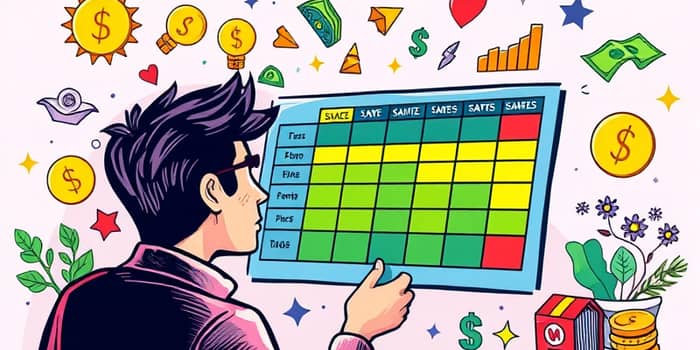
In a world where money often feels like a mystery, having a clear system to measure and improve your finances can be truly empowering. That’s where the spending scorecard comes in. This proven tool shines a light on hidden strengths and weaknesses, guiding you toward financial well-being.
By treating your finances like a routine checkup, you gain the insight needed to build lasting security. Let’s explore how this simple yet powerful framework can transform your money management and unlock real progress.
Understanding the Spending Scorecard Framework
The spending scorecard operates as a financial health checkup, created by the AICPA Personal Financial Planning Division. You answer a series of yes/no questions, each ‘yes’ awarding one point. Once you tally your points, you get a vivid snapshot of where you stand.
This approach removes guesswork, replacing it with a clear, objective system that highlights areas needing attention. Instead of reacting when a crisis hits, you can be proactive rather than reactive, steering your finances with purpose and confidence.
Interpreting Your Score: The Stoplight System
To make sense of your total points, the scorecard uses a stoplight system. Like traffic signals, it provides immediate feedback:
With this intuitive color-coding, you can instantly identify where you excel and where you must dedicate extra effort. It’s like having a dashboard for your financial life.
Key Components to Monitor
The spending scorecard examines critical aspects of your financial life. Tracking these components ensures a comprehensive analysis of personal finances every year:
- Emergency Funds
- Credit Card Debt
- Household Consumer Debt
- Savings and Investments
- Written Financial Plan
Building Your Emergency Fund
An emergency fund serves as your financial safety net. It includes cash assets you can access quickly, such as checking accounts, savings, and penalty-free instruments. Calculate your ratio by dividing these reserves by your monthly gross salary (or net income if self-employed).
Scoring guidelines:
- Three months or more: Green – you’re well protected.
- One to three months: Yellow – some vulnerability.
- Less than one month: Red – you may face stress in a crisis.
Remember, the average American has less than one month’s reserve. Building this fund can feel challenging, but each deposit brings you closer to true financial resilience.
Managing Debt Wisely
Debt can be a tool or a trap. The scorecard splits liabilities into credit card debt and other consumer obligations like car loans and tuition. Comparing balances to your gross income reveals risk levels.
For credit cards:
- Less than 5% of income: Green (safe zone)
- 5–15%: Yellow (caution)
- Above 15%: Red (danger)
And for other consumer debt, apply the same thresholds. By regularly reviewing these ratios, you uncover trends and can adjust repayment strategies to free up cash flow.
Supercharging Your Savings and Investments
Long-term savings beyond retirement accounts reflect your commitment to future goals. Calculate the percentage of your gross salary dedicated to these accounts:
More than 5% places you in a strong position (Green), 1–5% signals room for growth (Yellow), and zero or net withdrawals sound an alarm (Red).
Retirement contributions follow the same logic. By monitoring these percentages, you build momentum toward milestones like a down payment, college fund, or a comfortable retirement.
Writing Your Personalized Financial Plan
A written plan turns aspirations into commitments. Your document should outline clear goals, both short- and long-term, plus methods to evaluate progress. Statistics show that people with written goals and objectives are far more likely to succeed.
Include these cornerstones:
- Credit and debt management targets
- Investment and savings milestones
- Insurance and risk mitigation strategies
- Estate planning and asset protection
Reviewing and adjusting this plan annually fuels continuous improvement and keeps you aligned with changing circumstances.
Beyond the Basics: Advanced Metrics and Strategy
Once you master the core components, explore deeper metrics like the Personal Finance Score, which divides net worth by annual expenses. A score above 1 indicates you’re building true wealth.
You can also borrow insights from the Balanced Scorecard framework for a holistic view. By adding lenses such as learning and growth or internal processes, you cultivate a richer, more balanced financial strategy.
Why This Matters: Purpose & Benefits
Adopting a spending scorecard delivers lasting advantages. It empowers you to:
- Develop targeted action plans before problems escalate
- Track progress toward financial independence
- Conduct a thorough, annual review of your situation
- Align daily choices with long-term objectives
By treating your finances as a dynamic system rather than a set of one-off tasks, you nurture habits that compound into real success.
Tracking your way to financial success doesn’t require perfect numbers—it demands consistent effort and honest assessment. With the spending scorecard in hand, you gain the structure and insight to turn aspirations into achievements. Start today, and watch your confidence—and your balance sheet—grow.
References
- https://www.betterwaycpa.com/personal-finance-scorecard-checklist/
- https://www.sites.ext.vt.edu/newsletter-archive/fmu/1998-12/scorecrd.html
- https://boardmix.com/knowledge/balanced-scorecard-in-finance/
- https://online.hbs.edu/blog/post/balanced-scorecard
- https://budgetsaresexy.com/new-personal-finance-score/
- https://www.intrafocus.com/2024/06/four-perspectives-of-the-balanced-scorecard/
- https://www.clearpointstrategy.com/blog/full-exhaustive-balanced-scorecard-example
- https://bernardmarr.com/the-four-perspectives-in-a-balanced-scorecard/
- https://www.youtube.com/watch?v=C0JZdyb6hZE
- https://hbr.org/1992/01/the-balanced-scorecard-measures-that-drive-performance-2