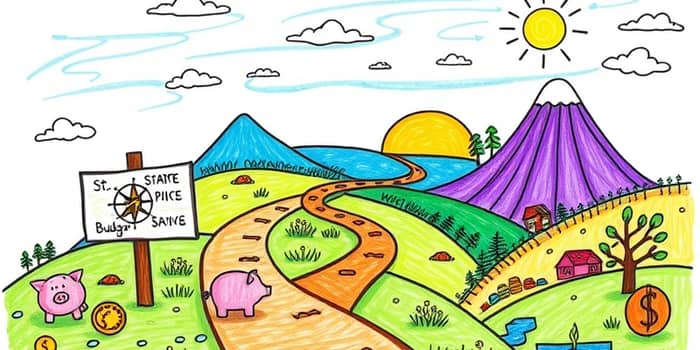
Embark on a transformative trek through your finances, charting a course from self-discovery to long-term security. This guide uses a journey metaphor to inspire meaningful change and equip you with practical tools at every turn.
Self-Assessment and Goal Setting: Your Starting Point
Before setting out, you must understand where you stand. Conduct a thorough review of your income streams—salary, pensions, rentals, and investment returns—and tally monthly expenses to calculate your net worth.
Use a Personal Inventory Tracker to track income sources and expenses with clarity. Identify your money habits, leaks, and challenges. Are you reactive or proactive in your spending? Cultivate a positive money mindset to fuel forward momentum.
Define short-term goals (emergency fund, education costs) and long-term ambitions (home purchase, retirement). A Monthly Goal Review System helps you adjust course and celebrate milestones.
Mapping the Path: Crafting Your Budget
A well-drawn budget is your roadmap. Aim to spend less than you earn each month by aligning expenses with your core values. Slice your paycheck to cover needs, wants, and savings first.
- Know your take-home pay and fixed expenses
- Pay yourself first with an automatic transfer
- Avoid impulse purchases by waiting 24 hours
- Review and adjust your budget quarterly
Download a Budget Worksheet or use Fidelity’s personalized tool to visualize cash flow. Keep a “100 Small Ways to Save Big” checklist within reach for inspiration.
Building Reserves: Income, Saving, and Banking Basics
Your income is the fuel for progress. Channel surplus into savings to build resilience. Start with an emergency fund covering three to six months of expenses—this safety net prevents detours under stress.
Explore high-yield savings accounts and certificates of deposit (CDs) to enhance earnings. If your employer offers retirement matches, maximize employer-matched contributions to accelerate growth.
Youth and teens can benefit from Fidelity Youth Accounts to learn early. Banking tools, like cash management accounts, can reimburse ATM fees and eliminate monthly charges.
Overcoming Obstacles: Debt Management and Credit Building
High-interest debt is the steep incline you want to conquer early. Focus on credit cards and private student loans before ramping up savings. Use a Debt & Credit Card Log to monitor balances and interest rates.
- Consolidate balances at lower interest rates
- Negotiate settlements or enroll in payoff plans
- Avoid payday loans and high-fee products
- Understand bankruptcy pros and cons before filing
As you pay down debt, build or repair credit with timely payments. Track your score and report any errors. Use eliminate high-interest debt first as your guiding principle.
Accelerating Forward: Investing Fundamentals
Investing differs from saving: it’s about purchasing assets—stocks, bonds, mutual funds, real estate—that can grow your wealth over time. Higher returns come with increased risk, so diversification is crucial.
Apply the Rule of 72 to estimate doubling time: divide 72 by your expected annual return. For example, at 6% growth, your investment doubles in about 12 years.
Consider robo-advisors for algorithm-driven portfolios if you prefer hands-off management. Remember: there are no shortcuts to riches, only disciplined strategy.
Safeguarding the Journey: Protection and Risk Management
Life’s storms are inevitable. Shield your progress with insurance: health, auto, home, and life policies form your protective canopy. Annuities can provide guaranteed income streams in retirement.
Discuss “His, Hers, Ours” money strategies with your partner to ensure shared understanding. Teach children positive financial habits early to set them on a strong path.
Always maintain adequate coverage to insurance to shield from hardship and protect loved ones from unexpected shocks.
Shared Journeys: Life Stages and Advanced Planning
As you approach family milestones—buying a home, funding college, planning retirement—your financial map must adapt. Stop living paycheck to paycheck by expanding your roadmap with clear checkpoints.
Use government data on household income and expenditures to benchmark your progress. Adjust your goals at each life stage to stay on course toward long-term prosperity.
Seeking a Guide: Professional Guidance and Careers
Even the most experienced travelers benefit from a guide. Certified Financial Planners (CFPs) can tailor strategies to your unique circumstances. Verify credentials through FPA or NAPFA, review fee structures, and read client testimonials.
The U.S. employs over 275,000 personal financial advisors, with growth projected at 5% through 2030. They help with annuities, bonds, insurance, and investment portfolios. Budget analysts and financial managers also offer specialized expertise.
Leverage free resources like the 90-page “Personal Finance Made Easy” workbook, CFPB tools, or community college courses. Employer-sponsored programs can provide coaching and workshops at no extra cost.
Your financial odyssey may span decades, but each phase offers an opportunity to learn and grow. By assessing your starting point, mapping a realistic path, building reserves, overcoming obstacles, accelerating with investments, safeguarding against risks, planning for shared futures, and seeking expert guidance, you can transform your money mindset and arrive at your financial destination with confidence.
References
- https://www.familycredit.org/resources/personal-finance-made-easy-a-complete-guide-to-taking-control-of-your-money
- https://guides.loc.gov/personal-finance/overview
- https://www.fidelity.com/financial-basics/overview
- https://www.annuity.org/personal-finance/
- https://www.iese.edu/insight/articles/personal-finance-beginners-guide/