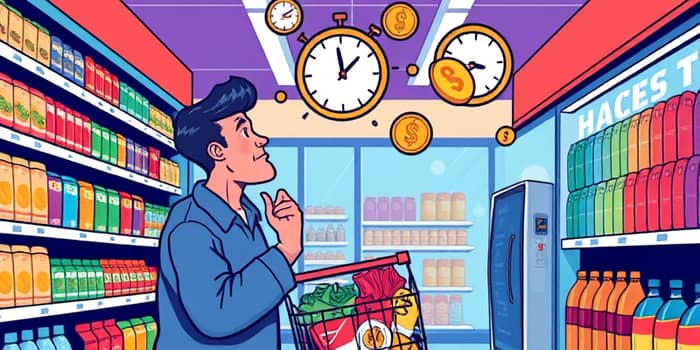
In an era where every minute counts and budgets shrink, the trade-offs we make in pursuit of convenience have never been more consequential. From grocery orders to quick coffee runs, our daily defaults shape both our financial health and overall well-being.
Understanding the patterns behind these choices empowers us to reclaim control, ensuring that convenience serves our goals rather than dictating them.
Understanding Strategic Spending Habits
Gone are the days when convenience was synonymous with impulse. Today’s consumers embrace the relentless quest for greater value on every trip. Recent research shows that 67% of global consumers will switch brands purely for a lower price, highlighting how price sensitivity now dominates purchasing decisions.
This deliberate mindset extends to digital grocery shopping, where 69% of US buyers prioritize cost over delivery speed. Comparatively, only 48% still cite speed first. Consumers are taking time to compare unit prices, read reviews, and plan their weekly menu around sales and coupons. Rather than grabbing items on a whim, shoppers are meticulously timing their visits to maximize savings, resulting in a noticeable shift towards intentionality over spontaneity.
Industry performance data from 2024 reflects this downtrend in unplanned purchases. The first half of the year witnessed a 1% decline in inside sales and a 3.4% drop in total transactions. Retailers that focused on loyalty incentives and spotlighted value bundles managed to counteract some of these declines, illustrating that strategic, intentional trip planning pays dividends for both consumers and operators.
- Price-led brand switching (67% of global consumers)
- Intentional trip planning replacing impulse buys
- Reducing overall occasions rather than traditional downtrading
Moreover, foot traffic disparities highlight the winners and the losers. Top-tier convenience retailers, such as Buc-ee’s, Sheetz, and Wawa, grew foot traffic by 0.8%, while the bottom tier saw a 2.7% decline. These market leaders have excelled at creating engaging environments, curated product assortments, and targeted promotions that resonate with value-conscious consumers.
The Paradox of Austerity and Indulgence
While many households cut back on staples, there’s an intriguing countercurrent of indulgence. Consumers express an unwillingness to forgo small pleasures; 19% of global shoppers plan to slash spending in non-discretionary categories while splurging on selective treats. This phenomenon, the complex value-splurging paradox, underscores a deep psychological need for occasional rewards.
Convenience stores have become the ideal destination for these budget-friendly indulgences. With 65% of consumers seeking deals on prepared foods, c-stores are evolving into affordable treats without compromising quality. Operators are capitalizing on this by introducing premium bakery items, gourmet sandwiches, and specialty coffee blends at accessible price points.
Health-conscious trends add further nuance. Over half of convenience-store foodservice customers report increased interest in healthy options. Forty-five percent expect to find such offerings, up from 40% just two years ago. GLP-1 medication users, households earning above $75,000, and younger demographics lead this charge, seeking balanced meals that satisfy both palate and nutritional goals.
Digital Permanence and Evolving Expectations
The pandemic catalyzed changes that endure today. What started as temporary safety measures has crystallized into permanent shifts in shopping behavior. Consumers in China and the US—in excess of 90%—shop online monthly, while 80% do so in Germany and the UK. Grocery delivery alone saw its share of spending jump from 9% in 2019 to 21% in 2024.
Interestingly, delivery speed, once king, now ranks fifth among priorities. Ninety percent of consumers are willing to wait two to three days for delivery, signaling that cost savings and reliability outweigh rapid fulfillment. This trend creates an opening for convenience retailers to integrate digital services with traditional formats, offering click-and-collect, curbside pickup, and subscription-based replenishment.
- Consumers accept longer delivery windows for cost savings
- Online-only channels become habitual monthly destinations
- Food delivery’s robust growth persists worldwide
August 2025 data underscores a revival: total retail sales rose 0.5% month-over-month and 6.81% year-over-year, driven by back-to-school shopping and pre-tariff stock-ups. Grocery and beverage stores posted gains of 0.98% and 7.17% year-over-year respectively, reflecting consumers’ strategic timing to outmaneuver rising prices.
Opportunities for Consumers and Retailers
Armed with insight, consumers can sharpen their approaches by combining in-store tactics with digital tools. Scanning weekly ads, utilizing cashback apps, and monitoring loyalty thresholds can yield significant savings without sacrificing convenience. In effect, shoppers can balance convenience with mindful spending, optimizing every transaction.
Retailers, in turn, must elevate their value propositions. Prioritizing transparent pricing, dynamic promotions, and fresh, health-forward offerings will resonate deeply. The top performers demonstrate unwavering dedication to high-quality offerings, reinforcing customer loyalty and justifying a modest price premium.
- Leverage loyalty programs to unlock exclusive deals
- Combine digital orders with in-store pickups
- Seek healthy, value-packed meal solutions
- Plan visits around promotional cycles
Operationally, addressing key challenges—rising ingredient costs (69%), packaging inflation (66%), shrink and theft (54%)—requires innovative solutions. Partnering with local suppliers, optimizing portion sizes, and investing in theft-deterrent technologies can mitigate margin pressures. Moreover, fostering community engagement through events, sampling initiatives, and local collaborations solidifies the store’s role as an integral neighborhood hub.
A Day in the Life: Rethinking Defaults
Consider Sarah, a marketing manager who used to stop for a midday coffee and snack three times a week without much thought. Her default ritual cost her time—waiting in line—and money, as premium coffee and pastries quickly added up. After researching local convenience-store deals and exploring health-minded options, she mapped out her week, pinpointing the best times to visit to avoid crowds and leverage loyalty rewards.
Now, Sarah substitutes one of her weekly stops with a subscription-based coffee app from her favorite c-store, receiving a free pastry on alternating Fridays. Over a month, she saves nearly $20 and four extra hours, which she redirects toward exercise or reading. This simple shift exemplifies how mindful choices throughout daily routines can compound into significant benefits.
Charting a Path Forward
As convenience continues to evolve, the most successful consumers and retailers will be those who approach each transaction with intention and adaptability. By embracing conscious, deliberate store visits and forging stronger digital-physical integrations, stakeholders can transcend the outdated notion of mindless consumption. For consumers, this means setting aside time each week to review menus, promotions, and loyalty benefits, then building a flexible schedule that aligns purchases with personal goals—be it saving money, improving health, or simply reclaiming free time.
Retailers that succeed will be those that treat convenience as a holistic experience, combining intuitive store layouts, ambient design, and personalized digital offers. Imagine walking into a store where shelf labels automatically update with your preferred deals, or where a mobile app guides you to the healthiest, most cost-effective selections. Seamless, personalized omnichannel experiences not only drive sales but deepen emotional bonds, encouraging repeat visits and word-of-mouth referrals.
The cost of convenience extends beyond monetary exchange; it reflects our values, time, and well-being. Through strategic planning, selective indulgence, and a commitment to quality, we can all achieve more than simple transactions. We can craft a sustainable, rewarding routine that honors both our budgets and our lives.
Ultimately, it is up to each of us to redefine convenience on our own terms. By mindful choices that balance cost and convenience, we chart a path toward a future where every purchase is both intentional and enriching.
References
- https://www.nacsmagazine.com/Issues/January-2025/On-the-Retailer-Radar-in-2025
- https://cspdailynews.com/foodservice/two-thirds-consumers-seek-deals-convenience-store-prepared-foods
- https://www.convenience.org/Media/Daily/2025/September/16/3-Retail-Spending-Grew-in-August_Finance
- https://www.emarketer.com/content/5-key-stats-about-what-convenience-means-2025
- https://www.mckinsey.com/industries/consumer-packaged-goods/our-insights/state-of-consumer
- https://www.convenience.org/Media/Daily/2025/1/8/2-Insights-Retailer-Preference-Index-2025_Ops
- https://www.upside.com/business/retailer-blog/convenience-store-trends