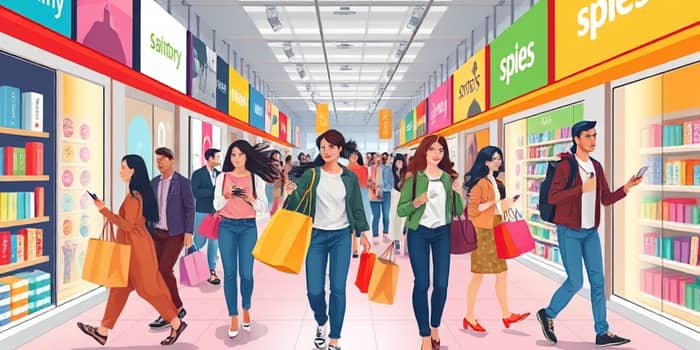
In a 2026 landscape defined by a K-shaped economy and widening income divides, consumers face rising prices, inflation, and policy shifts that reshape every purchase. With 37% of U.S. shoppers naming price increases as their top concern, the quest for value-seeking strategies to stretch budgets has never been more urgent.
Yet even amid these pressures, innovative spending tactics—from fragmented shopping trips to digital deal hunting—are empowering households to maximize every dollar. Read on for five actionable secrets that turn economic headwinds into opportunities.
Secret 1: Fragment Your Spending for Maximum Value
Massive baskets are out—frequent, targeted trips are in. By visiting multiple outlets each month, shoppers capture the best prices and freshest deals.
The average consumer now hits three grocery stores monthly for bargains, alongside visits to 2.6 gas stations and 3.2 convenience stores. Digital platforms add a further layer of choice, enabling consumers to compare prices across three times as many virtual aisles.
- Plan brief, focused shopping trips instead of large hauls.
- Use multiple store loyalty programs to stack rewards.
- Complement in-store visits with online price checks.
Secret 2: Embrace Frequency Over Volume
Leading brands grow through household penetration and trip frequency—not by pushing up spend per visit. A 1.5% lift in penetration and a 5.7% jump in frequency drove the fastest brand growth in 2025.
Smaller, more frequent trips let you avoid spoilage, respond to flash sales, and leverage short-term coupons. By making routine visits you become a more desirable customer to stores, unlocking personalized discounts and targeted deals.
Rather than loading your cart once a month, break down your list into weekly or even bi-weekly shops. You’ll capture new promotions, freshness guarantees, and accelerated digital coupon rollouts.
Secret 3: Tariff-Proof Your Purchases
With tariffs hiking import prices by 6.6% and domestic goods by 3.8% in 2025, 79% of consumers have already changed their habits. Shifting toward generics, bulk packs, and cash-back apps is a proven shield against unpredictable price swings.
- Stock up on private-label essentials where quality is comparable.
- Buy non-perishable items in bulk during discount events.
- Leverage rebate and cash-back platforms for recurring savings.
These measures help insulate your budget from both inflation and future tariff adjustments, ensuring your core necessities remain affordable year-round.
Secret 4: Leverage Digital Channels to Unlock Deals
Online shopping traffic grew 2 percentage points in 2025, translating to 2.6 billion digital trips. Whether ordering groceries, general merchandise, or quick-service meals, the web offers unparalleled price transparency.
By subscribing to deal-alert newsletters, using browser extensions that auto-apply coupons, and checking multiple e-tailers, you harness data-driven price comparisons in real time. Flash sales, limited-time free shipping offers, and app-exclusive discounts become second nature.
Don’t forget mobile wallets and digital receipt apps—they track your purchases and automatically notify you when a price drops or a rebate is available.
Secret 5: Tailor Choices to Your Income Realities
The K-shaped recovery means high-income households (over $75 000) drive discretionary spending on travel and experiences, while lower-income families focus on essentials, which now account for 61% of their budgets.
By selecting strategies that align with your financial position, you’ll optimize value at every tier:
- High earners: Leverage premium loyalty programs and dynamic pricing tools for experiential spends.
- Mid incomes: Blend budget-friendly bulk buys with selective splurges on quality staples.
- Lower incomes: Focus on essential private-label alternatives and community co-ops for deeper discounts.
This income-smart approach to spending ensures you capture the right blend of savings and satisfaction, no matter where you fall on the spectrum.
Outlook for 2026: Resilient Growth and Emerging Risks
Despite sentiment softening—49% believe the economy is worsening—spending is forecast to grow 2.8% in 2026 (TD) versus a potential 1.5% slowdown (Moody’s). Wealthier consumers, bolstered by tax benefits skewed toward the top quintile, will continue to spend, while value retailers and multitier pricing models gain market share.
Keep an eye on healthcare deductibles, childcare costs, and labor market shifts, all of which can nibble away at disposable income. Yet by deploying the five secrets above—fragmenting trips, increasing frequency, tariff-proofing, tapping digital tools, and aligning with your income—you’ll not only survive but thrive.
Unlock smarter spending today and transform economic uncertainty into a strategic advantage. Every purchase becomes an opportunity to reinforce your financial resilience and peace of mind.
References
- https://www.numerator.com/visions-consumer-trends/
- https://www.upside.com/business/retailer-blog/consumer-spending-trends-2026
- https://economics.td.com/us-k-shaped-consumer-spending
- https://www.privatebank.bankofamerica.com/articles/2026-consumer-outlook.html
- https://www.retaildive.com/news/consumer-spending-growth-slow-2026/807782/
- https://www.conference-board.org/topics/consumer-confidence/
- https://www.deloitte.com/us/en/insights/topics/economy/consumer-pulse/state-of-the-us-consumer.html
- https://www.salsify.com/blog/shopper-spending-changes-in-2026