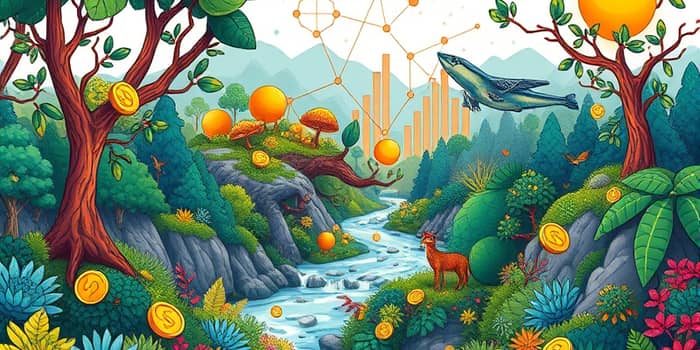
In an era where economic stability and environmental health are indivisible, financial ecology emerges as a transformative lens through which we can harmonize monetary growth and planetary well-being. This concept underscores how the flows of capital, credit, and investment are intimately bound to the vitality of ecosystems that sustain every aspect of human activity. As we witness more frequent climate disruptions, resource scarcity, and social inequities, the urgency of reimagining finance through an ecological framework has never been greater.
By adopting a financial ecology mindset, individuals and institutions alike can become stewards of both wealth and the natural world. This comprehensive approach invites us to question traditional growth metrics and embrace strategies that value biodiversity, resilience, and social impact. Over the next sections, we will explore how deeply intertwined economic systems and ecological systems truly are—and how you can play an active role in cultivating a robust and sustainable wealth ecosystem.
Understanding Financial Ecology
At its essence, financial ecology examines the essential links between financial systems and the natural environment. Every dollar invested in agriculture, energy, manufacturing, or services ultimately relies on ecosystems that provide clean water, fertile soil, stable climate, and diverse biological resources. When these natural foundations are degraded by pollution, deforestation, or climate change, the ripple effects can destabilize markets, disrupt supply chains, and imperil long-term returns.
Conversely, financial flows have the power to accelerate environmental regeneration when directed toward sustainable practices. By valuing natural capital—the services ecosystems provide—organizations can make more informed decisions that mitigate risk and generate lasting benefits. Emphasizing this co-evolutionary perspective shifts finance from a zero-sum game to a fertile terrain for innovation and resilience.
Core Concepts and Interdependencies
Several foundational ideas underpin the financial ecology framework. Ecological dependency reminds us that sectors from forestry to tourism depend on ecosystem services. Recognizing this interdependence is the first step toward aligning financial incentives with environmental stewardship. Meanwhile, environmental risk encompasses physical risks like floods and droughts, transition risks tied to policy shifts, and liability risks arising from potential lawsuits over environmental damage.
Panicked reactions to isolated events can mask broader vulnerabilities. True financial ecology relies on systemic thinking—mapping how one regional climate event might cascade through global supply chains, affect credit ratings, or trigger defaults. By understanding and modeling these linkages, investors and policymakers can anticipate tipping points and design buffers that preserve both ecological and economic health.
Tools and Frameworks for Sustainable Finance
Embedding ecological considerations into financial decision-making requires a robust toolkit. Scenario analysis enables organizations to explore multiple futures under differing climate trajectories or resource availability. Stress testing measures resilience by simulating severe environmental shocks, while environmental accounting assigns economic value to ecosystem services—informing budgets, balance sheets, and risk assessments.
At the investment level, ESG integration (environmental, social, and governance) ensures that portfolios reflect ethical considerations alongside traditional financial metrics. By screening for sustainable practices and engaging actively with companies, investors can nudge markets toward lower carbon footprints and more equitable labor standards.
Building a Resilient Wealth Ecosystem
A resilient wealth ecosystem thrives on diverse investments across sectors that align with environmental and social goals. Rather than concentrating capital in a single asset class or geography, spreading risk across green bonds, sustainable agriculture, renewable energy projects, and community finance initiatives can yield balanced returns and bolster ecological health.
Ecosystem partnerships further strengthen this approach. Collaborations between established financial institutions and nimble fintech firms can unlock new distribution channels, enhance technology platforms, and deliver specialized services without massive upfront capital expenditures. Recent acquisitions like Morgan Stanley’s integration of E*Trade and Goldman Sachs’ United Capital deal illustrate how incumbents are reshaping the landscape to serve evolving client demands.
- Assess ecological dependencies in your portfolio
- Value natural capital in financial models
- Integrate ESG criteria into every decision
- Stress test against severe environmental scenarios
- Partner with fintechs for digital agility
- Engage stakeholders through transparent reporting
Embracing Collaboration and Innovation
No single actor can steward the planet or the financial markets alone. Open ecosystems foster transparency by standardizing data exchange, reducing onboarding friction through pre-completed compliance checks, and centralizing insights in a secure data lake. Investors gain clarity on offerings, while wealth managers can rapidly deploy innovative tools.
Generational dynamics underscore the imperative for change. Millennials and Gen Z demand seamless, connected experiences that reflect their values. They expect platforms that not only offer low-cost trading but also demonstrate measurable social and environmental impact. Firms that fail to adapt risk losing relevance with these influential demographics.
At the policy level, regulators are increasingly requiring environmental disclosures, carbon risk stress tests, and clear governance around natural capital. This evolving landscape offers a unique opportunity for forward-thinking organizations to shape best practices, influence standards, and co-create a more inclusive, resilient financial system.
Ultimately, financial ecology is not an abstract academic pursuit—it is a call to action. By redefining prosperity to include both monetary gains and ecosystem health, we can design strategies that deliver long-term value for investors and communities alike. Each step toward sustainable finance is a vote for a thriving planet and a robust economy.
As you reflect on your role in this shared journey, consider the interconnectedness of every investment decision. Choose to nourish your wealth ecosystem, support regenerative initiatives, and champion transparency. In doing so, you become an architect of a future where abundance and nature flourish together.
References
- https://climate.sustainability-directory.com/term/financial-ecology/
- https://copiawealthstudios.com/blog/wealth-management-evolution-from-legacy-to-digital
- https://neweconomics.org/2009/11/the-ecology-of-finance
- https://www.ey.com/en_us/insights/wealth-asset-management/how-wealth-and-asset-managers-can-leverage-ecosystems-to-catalyze-growth
- https://jemi.edu.pl/vol-18-issue-4-2022/fintech-framing-financial-ecologies-conceptual-and-policy-related-implications
- https://www.wealthbriefing.com/html/article.php/advancing-wealth-management-with-a-digital-ecosystem
- https://nitrogenwealth.com/wealth-management-glossary/
- https://www.msci.com/indexes/index-education/the-financial-market-ecosystem
- https://pmc.ncbi.nlm.nih.gov/articles/PMC11328145/
- https://www.pwc.ch/en/insights/fs/new-ecosystems-in-wealth-management.html
- https://www.cfainstitute.org/insights/articles/how-wealth-management-makes-a-positive-difference-to-legacy-and-lifestyles
- https://www.qedinvestors.com/blog/the-future-of-financial-advice-and-wealth-management
- https://www.citigroup.com/global/news/press-release/2023/global-survey-shows-wealth-management-ecosystem-at-inflection-point
- https://investmentsandwealth.org/about/body-of-knowledge
- https://alphafmc.com/blog/2025/04/15/key-contributions-of-advanced-investment-platforms-in-transforming-wealth-management/
- https://www.asset-map.com/blog/wealth-management-technology