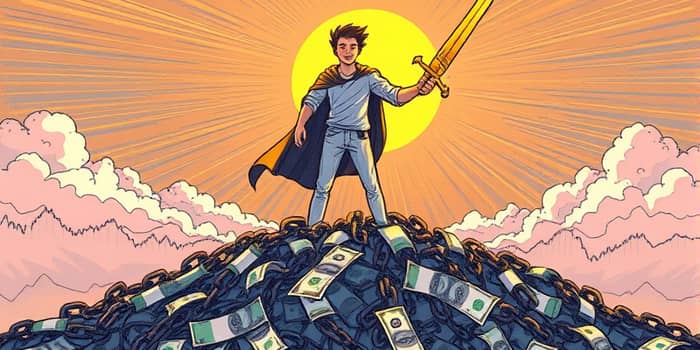
In a pivotal moment record $18.8 trillion debt stands as a defining challenge for American households. Rising costs, mounting obligations, and uncertain economic winds have thrust millions into a relentless cycle of payments and stress. Yet, within this daunting reality lies an unprecedented opportunity: the chance to reclaim financial freedom through focused, strategic action.
By approaching liabilities with clarity and determination, every individual can transform overwhelming numbers into manageable milestones. This article offers a comprehensive roadmap, grounded in the latest data, to help you navigate mortgage burdens, credit card pressures, student loan strains, and more. Empower your journey with actionable insights designed to conquer liabilities once and for all.
Analyzing the Current Debt Landscape
Understanding the nuances of household obligations is crucial before implementing any plan. As of Q4 2025, total U.S. household debt surged with a record $18.8 trillion in Q4 2025, marking a significant annual uptick. Mortgage debt remains the dominant category, accounting for approximately 70% of all liabilities and reflecting continued growth in housing costs and borrowing.
However, beneath the surface, other categories reveal critical trends. Credit card balances climbed nearly 10% year-over-year, signaling increased reliance on revolving credit. Most alarmingly, student loan delinquencies skyrocketed, with the 90+ days past due rate leaping to 16.19%—a dramatic warning of systemic strain as pandemic forbearance measures concluded.
Auto loans, HELOCs, and other obligations each carry their own patterns of risk, often concentrated in specific age groups or economic cohorts. Recognizing these distinctions is the first step toward crafting personalized strategies that address both immediate pressures and long-term goals.
Targeted Strategies by Debt Category
Each type of liability demands a unique approach. Here are tailored tactics to address major debt categories effectively:
- Mortgage management: explore refinancing or rate-lock opportunities to reduce interest burden, accelerate payments by adding extra principal each month, and consider biweekly payment plans to shorten loan terms.
- Credit card reduction: prioritize high-interest balances using either the avalanche or snowball method, negotiate lower rates with issuers, and transfer balances to cards offering 0% introductory APR for an interest-free window.
- Student loan navigation: evaluate income-driven repayment plans, apply for loan forgiveness programs, and consider a targeted repayment accelerator—redirecting any windfalls or bonuses toward the highest-interest federal or private loans.
- Auto loan optimization: refinance to secure lower rates if credit has improved, increase payment frequency, and explore manufacturers’ incentives or loyalty offers to reduce principal faster.
- HELOC utilization: use home equity lines prudently for consolidating higher-interest debts, maintain strict budgeting to avoid overborrowing, and lock in fixed rates when available to guard against rate hikes.
Generation-Specific Action Plans
Age and life stage significantly influence debt dynamics. By adapting strategies to generational contexts, individuals can harness tailored solutions that reflect their unique challenges and opportunities.
- Gen Z (18–28 years): focus on building emergency savings to avoid revolving credit, prioritize small student loan balances through micro-payments, and start a retirement account to leverage compound growth.
- Millennials (29–44 years): balance mortgage affordability with family goals by exploring down payment assistance and adjustable-rate options, while systematically attacking credit card and student debt.
- Generation X (45–60 years): confront the peak liability phase by optimizing mortgage terms, maximizing retirement contributions, and ensuring debt obligations align with later-life income projections.
- Baby Boomers (61–79 years): emphasize maintaining liquidity; consider reverse mortgage options cautiously, consolidate smaller debts, and protect credit health to preserve access to key financial tools.
- Silent Generation (80+ years): prioritize debt obligations with estate planning, engage trusted advisors to manage HELOCs or ongoing lines of credit, and safeguard fixed incomes against unexpected payment spikes.
Delinquency Prevention and Recovery
With serious delinquency rates nearly doubling year-over-year, proactive measures are critical to avoid damaging credit scores and incurring additional fees. Effective prevention and recovery involve both mindset shifts and practical steps.
- Regularly review credit reports to catch errors early and dispute inaccuracies promptly.
- Communicate with lenders at the first sign of hardship to negotiate temporary forbearance or modified payment plans.
- Leverage hardship programs offered by servicers, including interest-only payment periods or reduced principal options.
- Seek guidance from reputable housing counselors or nonprofit credit advisors to explore consolidation or debt management plans.
- Develop a sinking-fund system: allocate small, regular contributions toward upcoming payments to avoid last-minute shortfalls.
Embracing a Debt-Free Future
Standing at the crossroads of liability and liberation, every choice matters. While the path to debt freedom is rarely linear, consistent, deliberate actions compound over time, leading to profound transformation. Embrace transparency in your finances: track every dollar, celebrate incremental victories, and recalibrate strategies as life evolves.
True resilience emerges when individuals transform debt from a burden into a catalyst for disciplined growth. By harnessing tailored strategies for each liability and fostering an unyielding commitment to progress, no financial horizon remains unreachable. Let today’s dedication serve as the cornerstone for a future defined not by obligations, but by opportunity, security, and lasting prosperity.
References
- https://goldrushcam.com/sierrasuntimes/index.php/news/local-news/75433-federal-reserve-bank-of-new-york-s-center-for-microeconomic-data-quarterly-report-on-household-debt-and-credit-for-quarter-4-2025-finds-as-household-debt-levels-grow-modestly-mortgage-delinquencies-continue-to-increase
- https://carry.com/learn/average-debt-by-age
- https://www.newyorkfed.org/newsevents/news/research/2026/20260210
- https://tradingeconomics.com/united-states/debt-balance-total/news/524708
- https://fred.stlouisfed.org/series/HDTGPDUSQ163N
- https://www.newyorkfed.org/microeconomics/hhdc
- https://www.jec.senate.gov/public/index.cfm/republicans/debt-dashboard